


Home » Summer school » Structural Robustness and Resilient Infrastructure against Extreme Hazards
Naviga questa sezione
Structural Robustness and Resilient Infrastructure against Extreme Hazards
Important dates & payment infos
Registration by:
6 September 2024
on-line form to be filled in
Registration confirmation by
31 August 2024
Payment deadline:
15 August 2024
Reduced registration fee for students and postdocs:
350 €
Full registration fee for professors, researchers and professionals:
450 €
Course:
10-13 September 2024
Educational objectives
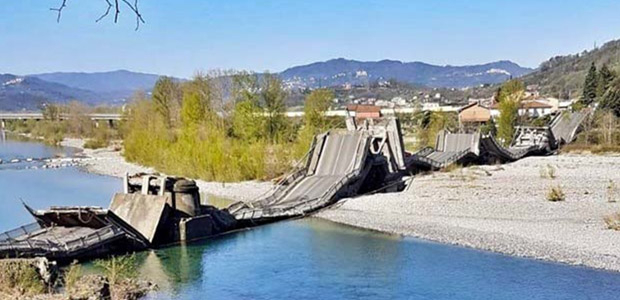
Civil engineering structures are increasingly subjected to extreme hazards, which are not usually considered in structural design and assessment. On one hand, such hazards have a very low probability of occurrence, and on the other, they are expected to produce huge consequences on people and property. Extreme events include but are not limited to natural events (e.g. landslides, floods, hurricanes), technological events (e.g. impact, fires, explosions), man-made events (e.g. malicious actions, human errors in design, construction or maintenance), deterioration phenomena (e.g. steel corrosion, concrete carbonation), and cascade events (e.g. natural-technological events). Climate change and strong urbanization in some areas have further exacerbated the occurrence of extreme hazards and their impact. This has significantly increased the awareness of governments and standardization bodies to develop guidelines for collapse prevention and provisions in national and international structural codes.
The Summer School aims at providing fundamentals of structural robustness, large-displacement inelastic response of structures, disaster risk and resilience of structures and infrastructures, as well as methods for structural design, assessment and retrofitting against extreme hazards.
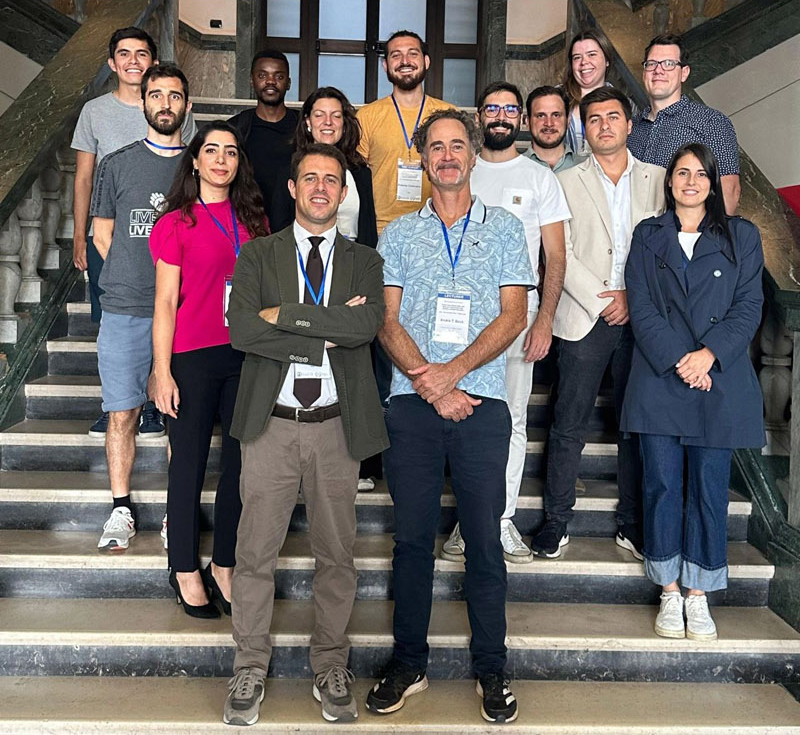
Participants
Lecturers
Fulvio Parisi (University of Naples Federico II, Italy) Director of the School
José M. Adam (Universitat Politècnica de València, Spain)
Robby Caspeele (University of São Paulo, Brasil)
André T. Beck (Ghent University, Belgium)
Bassam Izzuddin (Imperial College London, UK)
Thematic lecturers
Beatrice Belletti (University of Parma, Italy)
Emanuele Brunesi (EUCENTRE, Italy)
Marco di Prisco (Politecnico di Milano, Italy)
De-Cheng Feng (Southeast University, China
Audience
Ph.D. students
Postdoctoral researchers
Professionals
Facility managers
Outline
Starting from forensic analysis of catastrophic failures in buildings and bridges, the course will move across several issues as follows: progressive and disproportionate collapses of structures; structural and non-structural measures for collapse risk mitigation; definitions of structural robustness; design criteria and detailing rules for structural robustness; guidelines and code provisions at both national and international levels; robustness quantification; modelling of abnormal loads due to extreme events; extreme structural behaviour during experimental tests; nonlinear structural modelling; performance limit states under extreme structural response; simplified and advanced methods for progressive collapse analysis; performance-based robustness design and assessment; scenario-based and probabilistic simulations; component-level and system-level fragility for progressive collapse risk assessment; multi-hazard design and assessment; and relationship between structural robustness and disaster resilience. Besides theoretical lectures, several case studies of structures subjected to notional local damage, specified abnormal loads or retrofitting operations will be discussed. Design classes will allow participants to deeply understand and implement methodologies and tools.
Detailed program
Aspetti giuridici dell'ingegneria
- Attività di periti e consulenti tecnici
- Aspetti procedurali
- Responsabilità professionali
- Aspetti assicurativi
Ingegneria Forense Civile
- Gestione degli appalti
- Gestione dei lavori
- Vizi e difetti edilizi
- Abusivismo
- Problematiche geotecniche
- Ingegneria sanitaria
- Stima dei danni economici
- Tecnologie digitali per il rilievo e la diagnostica
- Gemelli digitali per la gestione delle opere d'ingegneria
Ingegneria Forense Industriale e Informatica
- Incendi, esplosioni e impatti
- Inquinamento acustico
- Inquinamento chimico ed elettromagnetico
- Incidentistica in campo aeronautico, chimico, elettrico, ferroviario, navale e stradale
- Sicurezza informatica
- Falsificazione di contenuti audio e video
- Identificazione di informazioni mendaci nelle reti dati
- Robotica e droni per monitoraggi, ispezioni e interventi
Ingegneria Forense Strutturale
- Prestazioni negative delle costruzioni in esercizio
- Crolli e dissesti strutturali
- Identificazione dinamica e monitoraggio strutturale
- Tecniche non distruttive
- Metodi di intelligenza artificiale
Affidabilità, rischio, robustezza e resilienza delle strutture
- Caratterizzazione delle incertezze aleatorie ed epistemiche
- Analisi di affidabilità
- Valutazioni di rischio multi-pericolo e multi-rischio
- Comportamento delle strutture nel ciclo di vita
- Eventi estremi ed effetti del cambiamento climatico
- Robustezza e resilienza di strutture e infrastrutture
- Strategie di mitigazione del rischio
Consolidamento delle strutture
- Materiali avanzati e tecniche innovative
- Modellazione e analisi di strutture esistenti e consolidate
- Metodi di rinforzo per eventi e rischi multipli
- Protezione del patrimonio culturale
- Sostenibilità degli interventi
Social events
The social dinner will take place at the Umberto Restaurant (Historic Italian venue since 1916), in via Alabardieri.
Venue
Suggested accomodations
Being September still high season in Naples, applicants are strongly encouraged to book their accommodation as soon as possible.
Contacts
Organizing issues: fulvio.parisi@unina.it – phd.dist@unina.it
Administrative issues: immacolata.diez@unina.it – valeria.peluso@unina.it
Partners